Young learners understand more, focus better, and process what they read more deeply on paper than on a screen. That's the consistent finding of recent peer-reviewed research, from toddlers sharing a picture book with a parent to middle schoolers working through a science lesson.
If you buy your curriculum as PDFs, there's a strong case for printing the core reading and workbooks. Below are the studies by age, why print helps, where screens still fit, and how printMe1.com can help get your PDFs printed, bound, and shipped to your mailbox.
What the research says, from toddlers to middle schoolers

Toddlers and preschoolers: print books spark more conversation. Researchers at the University of Michigan videotaped 37 parents reading with their 2 to 3 year olds using a print book, a basic e-book on a tablet, and an enhanced e-book with sound and animation. With the print book, parents and toddlers talked more about the story and worked together more. With the tablet, more of the talk was about the device itself. That back and forth conversation during story time is one of the most valuable parts of early literacy.
Study: Differences in Parent-Toddler Interactions With Electronic Versus Print Books. (2019) Tiffany G. Munzer, Alison L. Miller, Heidi M. Weeks, Niko Kaciroti, Jenny Radesky. Pediatrics, 143(4), e20182012. [https://publications.aap.org/pediatrics/article/143/4/e20182012/76785]
Ages 1 to 8: children understand more from paper books. A 2021 meta-analysis combined 39 studies of 1,812 children ages 1 to 8. When the only difference was paper versus digital, children understood the story less when reading the digital version. A parent reading alongside the child with a print book was more effective than digital book features the child used alone.
Study: A Comparison of Children's Reading on Paper Versus Screen: A Meta-Analysis. (2021) May Irene Furenes, Natalia Kucirkova, Adriana G. Bus. Review of Educational Research, 91(4), 483-517. [https://doi.org/10.3102/0034654321998074]
Ages 6 to 8: young brains focus better on paper. A 2023 study recorded the brainwaves of children ages 6 to 8 while they read short texts in print and on a screen. Reading in print produced higher frequency brain activity linked to concentration. Reading on the screen produced lower frequency activity linked to mind wandering and daydreaming, and that pattern was tied to weaker attention.
Study: Higher theta-beta ratio during screen-based vs. printed paper is related to lower attention in children: An EEG study. (2023) Michal Zivan, Sasson Vaknin, Nimrod Peleg, Tzipi Horowitz-Kraus. PLOS ONE. [https://journals.plos.org/plosone/article?id=10.1371/journal.pone.0283863]
Age 10: a national reading test scored higher on paper. Researchers in Norway gave the national reading test to 1,139 ten year olds on both paper and computer. On average, children at every level of reading ability scored significantly better on paper.
Study: Assessing children's reading comprehension on paper and screen: A mode-effect study. (2020) Hildegunn Støle, Anne Mangen, Knut Schwippert. Computers & Education, 153.
Fifth grade: kids can't tell that screens are hurting their comprehension. In a study of fifth graders, comprehension was better on paper even though reading time was the same. The children didn't realize they understood less on the screen, and the paper advantage held regardless of whether the child preferred screens. That's an important point for parents: your child saying "the tablet is fine" doesn't mean it is.
Study: Children's reading comprehension and metacomprehension on screen versus on paper. (2020) Vered Halamish, Elisya Elbaz. Computers & Education, 145, 103737. [https://doi.org/10.1016/j.compedu.2019.103737]
Ages 10 to 12: deeper processing after print. Neuroscientists at Teachers College, Columbia University recorded brain activity from 59 middle schoolers after they read passages in print and on screen. After print, the brain responses showed deeper processing of what the text meant. After screen reading, the responses looked like shallow reading.
Study: Middle-schoolers' reading and lexical-semantic processing depth in response to digital and print media: An N400 study. (2024) Karen Froud, Lisa Levinson, Chaille Maddox, Paul Smith. PLOS ONE, 19(5). [https://pmc.ncbi.nlm.nih.gov/articles/PMC11111009/]
Reading for fun: print pays off, digital doesn't for younger readers. A meta-analysis covering nearly 500,000 participants found that leisure reading on digital devices was negatively related to reading comprehension for primary and middle school students. For developing readers, time spent reading for fun in print has a much stronger link to comprehension.
Study: Do New Forms of Reading Pay Off? A Meta-Analysis on the Relationship Between Leisure Digital Reading Habits and Text Comprehension. (2025) Lidia Altamura, Cristina Vargas, Ladislao Salmerón. Review of Educational Research, 95(1), 53-88. [https://doi.org/10.3102/00346543231216463]
Why print helps young learners
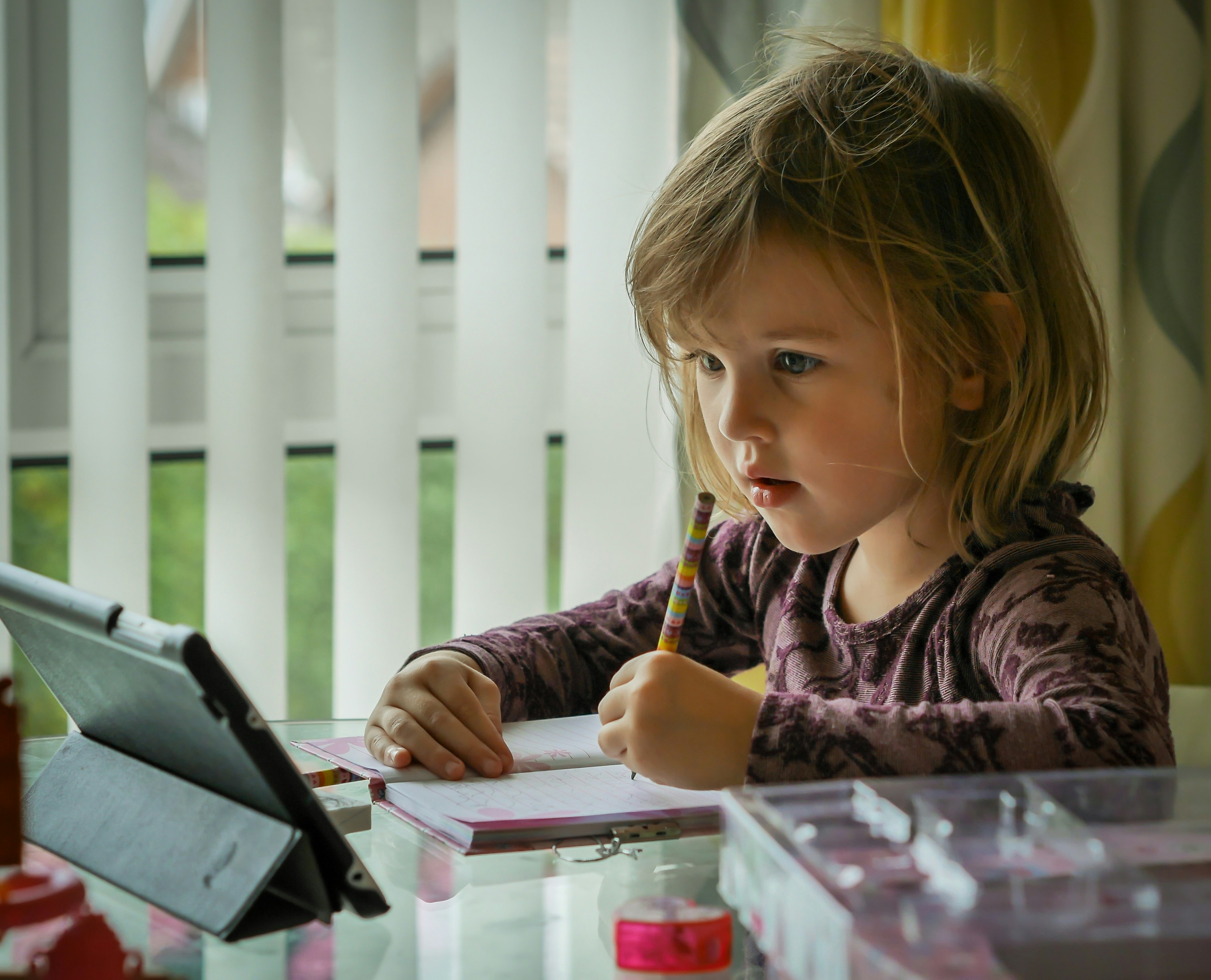
Researchers are still working out exactly why paper wins, but a few explanations come up again and again.
Fewer distractions. A tablet or laptop is also a game console, a video player, and a notification machine. Even when nothing pops up, children associate screens with quick, light activities. Paper has one job.
Text that stays put. On paper, every word has a fixed place on the page and the child can feel how far into the book they are. Those physical landmarks help the brain organize and recall what it read. Scrolling on a screen takes those landmarks away, and recent research points to scrolling as one of the biggest reasons comprehension drops on screens.
A lighter mental load. Young readers are still building the basic skills of decoding words and following ideas. Every bit of attention spent managing a device is attention not spent on the lesson.
More conversation with you. The toddler study above found that print books led to more talk between parent and child about the story itself. In a homeschool, that conversation is the teaching.
Hands-on work. Young learners need to write answers, circle, color, trace letters, cut out pieces, and check their work. A worksheet on a screen can't be traced with a pencil, and a printed workbook becomes a record of your child's progress that you can flip back through at the end of the year.
Sources for this section: Delgado and Salmerón (2021), The inattentive on-screen reading, Learning and Instruction, on attention and distraction. Clinton-Lisell and Litzinger (2026), Decoding digital reading, Education and Information Technologies, on scrolling. Zivan et al. (2023), cited above, on mental load. Munzer et al. (2019), cited above, on parent and child conversation.
Where screens still fit
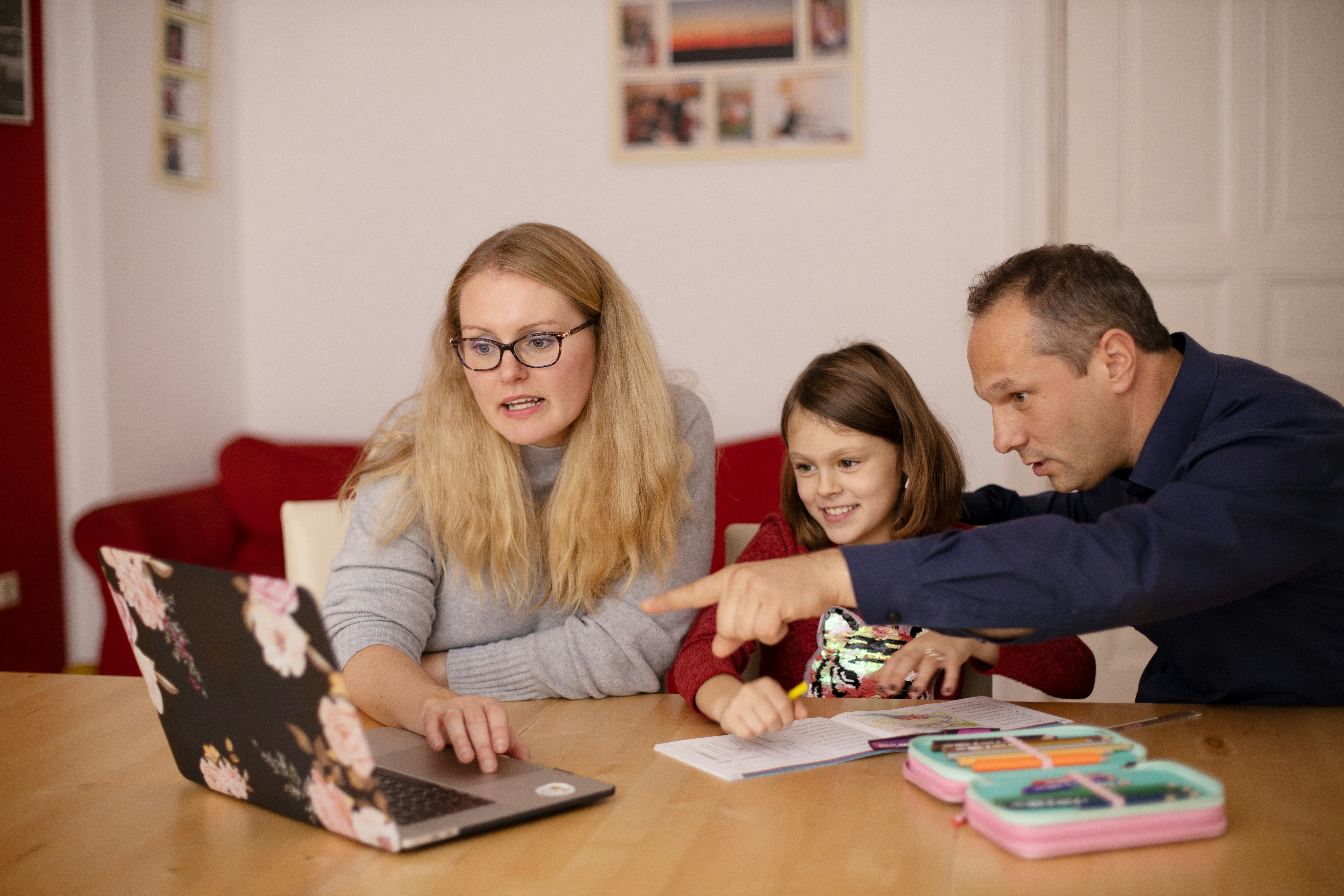
This isn't an argument against technology. The same meta-analysis of children ages 1 to 8 found that digital books with well-designed features that support the story can outperform paper, and digital dictionaries helped vocabulary. Short texts and lighter reading also show smaller differences between formats.
The takeaway is to be intentional. Use screens for what they do well, like video, interactive practice, and quick lookups. Put the core reading, the workbooks, and anything your child needs to really understand and remember on paper.
Sources for this section: Furenes, Kucirkova and Bus (2021), cited above, on enhanced digital books and dictionaries. Li and Yan (2024), Which reading comprehension is better? A meta-analysis of the effect of paper versus digital reading in recent 20 years, Telematics and Informatics Reports, on short versus long texts.
Getting your curriculum PDFs into print
Printing a 200 page curriculum at home means buying ink and paper, only to end up with a stack of loose pages that won't survive a month at the kitchen table. That's where we come in.
With printMe1.com, you upload your PDF, choose a binding, and we print, bind, and ship it to your door. Orders are ready to ship in 2 business days or less, a turnaround we've kept consistently for years, so you never have to choose between fast and affordable. That speed and price come from our own print production process, which is covered by 4 US patents. Our small team of PDF printing mad scientists developed every one of those features and processes. We ship within the US, and also to Canada and the UK.
We also offer single-sided printing, designed with homeschool content for younger learners in mind. It's ideal for worksheets, tracing pages, and cut-out activities where printing on the back of the page gets in the way.
If your curriculum is in several PDFs, you can print them all in one order. Our ordering process is simple and easy to use: upload your PDFs, choose your binding for each file, and check out in just a few clicks.
Conclusion
From toddlers sharing a picture book with a parent to middle schoolers working through a science lesson, the research points the same way. Young learners understand more, focus better, and process what they read more deeply when it's on paper.
That doesn't mean giving up the convenience of PDF curriculum. Buy it digitally, then print the core reading and workbooks your child needs to understand and remember. Save the screen for what it does best, and put the learning on paper. With printMe1.com, your printed and bound curriculum is ready to ship in 2 business days or less, so your next unit can be on paper sooner.
A note for homeschool curriculum creators
If you create homeschool curriculum as a PDF, the families buying it are reading this same research, and many of them will ask you where to get it printed. Our PDF Content Creators Program gives you a simple answer. When you join, we give you a custom referral link. Add it to your website, your post-sale download instructions email, or the PDF itself, and offer your community a custom promo code. You earn commission on every referred print order, at no extra cost to your users, just for sharing a link.
Contact us to get started.
Sources
- Munzer, T. G., Miller, A. L., Weeks, H. M., Kaciroti, N., & Radesky, J. (2019). Differences in Parent-Toddler Interactions With Electronic Versus Print Books. Pediatrics, 143(4), e20182012.
- Halamish, V., & Elbaz, E. (2020). Children's reading comprehension and metacomprehension on screen versus on paper. Computers & Education, 145, 103737.
- Støle, H., Mangen, A., & Schwippert, K. (2020). Assessing children's reading comprehension on paper and screen: A mode-effect study. Computers & Education, 153.
- Delgado, P., & Salmerón, L. (2021). The inattentive on-screen reading: Reading medium affects attention and reading comprehension under time pressure. Learning and Instruction, 71, 101396.
- Furenes, M. I., Kucirkova, N., & Bus, A. G. (2021). A Comparison of Children's Reading on Paper Versus Screen: A Meta-Analysis. Review of Educational Research, 91(4), 483-517.
- Zivan, M., Vaknin, S., Peleg, N., & Horowitz-Kraus, T. (2023). Higher theta-beta ratio during screen-based vs. printed paper is related to lower attention in children: An EEG study. PLOS ONE.
- Froud, K., Levinson, L., Maddox, C., & Smith, P. (2024). Middle-schoolers' reading and lexical-semantic processing depth in response to digital and print media: An N400 study. PLOS ONE, 19(5).
- Li, Y., & Yan, H. (2024). Which reading comprehension is better? A meta-analysis of the effect of paper versus digital reading in recent 20 years. Telematics and Informatics Reports.
- Altamura, L., Vargas, C., & Salmerón, L. (2025). Do New Forms of Reading Pay Off? A Meta-Analysis on the Relationship Between Leisure Digital Reading Habits and Text Comprehension. Review of Educational Research, 95(1), 53-88.
- Clinton-Lisell, V., & Litzinger, C. (2026). Decoding digital reading: a network meta-analysis of comprehension across devices. Education and Information Technologies, 31, 1611-1643.
For more on the research behind print, see Reading from Print vs Screens: The 4 Most Surprising Facts from Recent Research.


